Trigger warning: This story contains information and descriptions related to sexual exploitation and violence against children.
* Indicates a person’s name has been changed to protect their identity.
It often begins without warning. A friend request. A seemingly harmless message.
For 12-year-old Sofia*, what seemed like an ordinary online friendship quickly turned into something far more dangerous. The person she was talking to pretended to be a child her age. In reality, he was a 43-year-old man who groomed and sexually abused her.
“They texted about things they had in common, what sports they practiced, what hobbies they had,” Sofia's mother recalled. “All this time we had no idea that she was in danger.”
Sadly, Sofia's story is not unique. While the online world helps children learn, connect and play, it can also expose them to exploitation and abuse when the right protections are not in place.
New UNICEF research estimates that one in five children are sexually exploited or abused through digital technologies each year. This includes being exposed to unwanted sexual content, being pressured into sexual conversations or sharing intimate images, or having their images shared without their consent. This harm is not limited to obscure corners of the internet – it’s happening on the platforms and apps that children and young people use every day.
Read the full report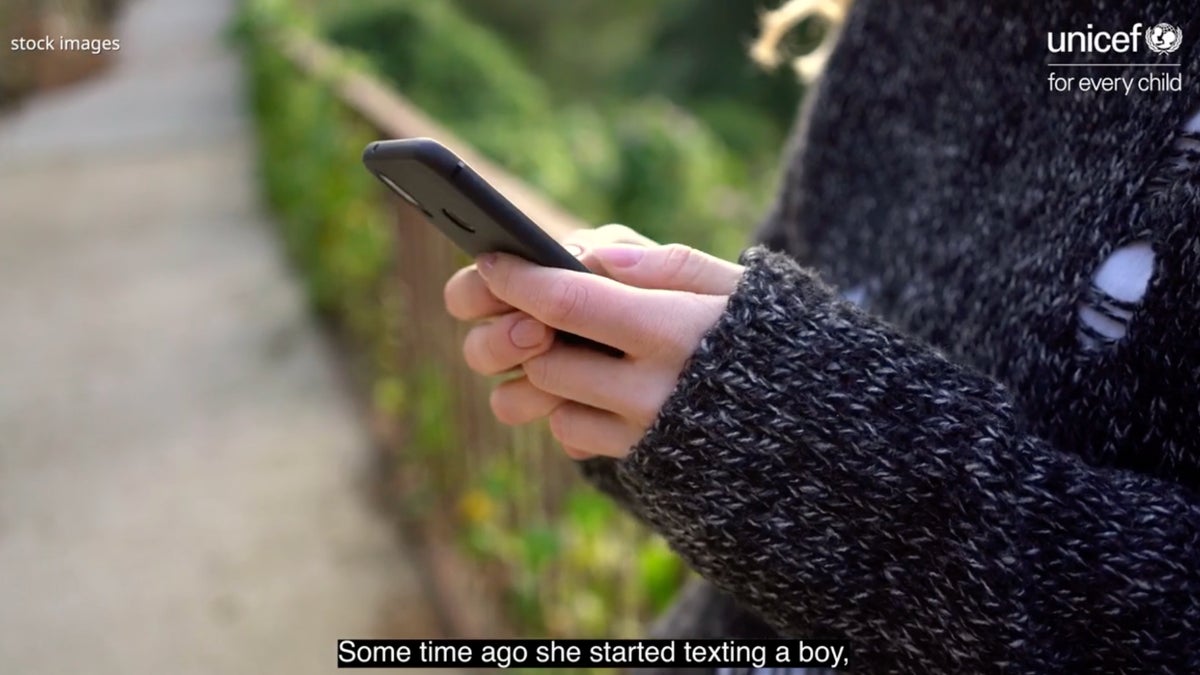
Sofia's story
What children are telling us about online harm
The report, Through Children's Eyes: How Digital Technologies Enable Child Sexual Abuse, puts children's voices at the centre, sharing their experiences in their own words and revealing how abuse can happen online. It is one of the largest studies ever undertaken on the issue, surveying more than 21,000 children across 21 countries in Africa, Asia, Latin America and the Caribbean, and Eastern Europe.
"We started talking, and we became boyfriend and girlfriend. It was my first relationship, and it was a telephone relationship because we never saw each other in person... The person asked me for photos. First, he made me build that bond of trust with him, and then he asked me for intimate photos of myself."
Some of the findings are confronting. But listening to children is essential if we are to better protect them and create safer digital spaces for every child.
1 in 5
Across the 21 countries, an estimated 20 million children aged 12 to 17 – about 1 in 5 on average – were sexually exploited or abused through digital technologies in the year prior to the survey.
1.1 million
Over 1.1 million children reported having had AI-generated sexual images or videos created depicting them.
60%
Almost 60 per cent of reported cases of technology-facilitated sexual abuse happened on social media platforms children use every day, including Facebook, WhatsApp, Instagram, TikTok and Snapchat. And around 14% of cases happened in online games.
57%
At least 57 per cent of cases involved someone the child already knew, including peers, romantic partners, friends, and family members - challenging assumptions that online abuse is primarily perpetrated by strangers.
4 in 10
Over 4 in 10 cases were not disclosed to anyone. Many children said they felt embarrassed, didn't know where to get help, or worried they wouldn't be believed or would get into trouble and lose their access to social media. Less than 1 per cent formally reported the abuse to the police, a social worker or a helpline.
4x
Children who have experienced sexual exploitation or abuse are more likely to report suicidal thoughts and behaviours, and are four times more likely to self-harm, than peers who have not.
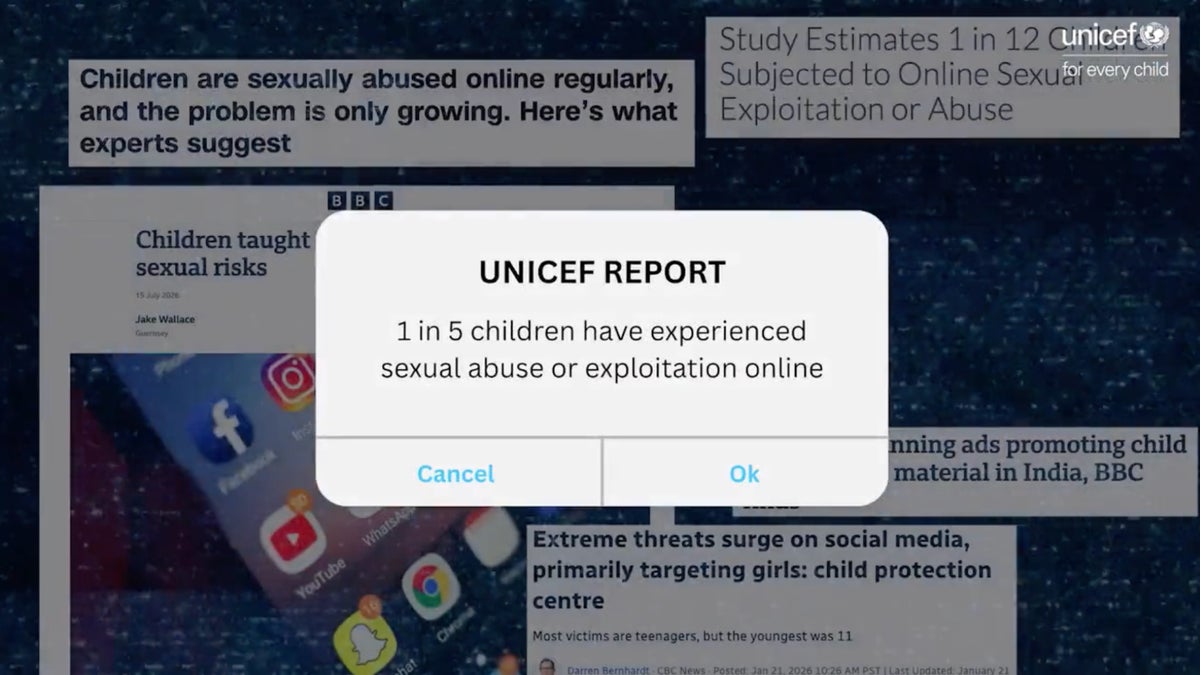
'Through Children's Eyes' report explainer
"I felt uncomfortable to share it, I was ashamed to share it. Now I’m not, now I can talk about it. But I think when you’re 15, and you’re still so insecure, you are ashamed, like, if I say that, what will people think of me? What will happen?"
Protecting children online starts with all of us
The harm digital technologies can cause isn’t inevitable. It can and must change.
The technology that enables abuse can be redesigned. Laws can be strengthened. Support services can be improved. Most importantly, adults can listen to children and act on what they tell us.
UNICEF is calling on action from:
•Tech companies: to design for safety, not engagement – restrict unsolicited contact and strengthen detection, including of AI-generated abuse material.
•Governments and regulators: to require safety-by-design, resource regulators to enforce it, and close legal gaps on grooming, extortion and AI-generated abuse.
•Services and systems: to fund the child protection, health and justice responses children need, and make reporting mechanisms genuinely reachable.
•Families, schools, societies: to shift the burden of protection off children – never blame them and address the vulnerabilities perpetrators exploit
Children should not carry the burden of protecting themselves online. Creating a safer digital world requires all of us to play a role.
Children's voices must lead the way
The children and young people who contributed to this report shared their experiences with extraordinary honesty and courage. Their stories offer a powerful reminder that behind every statistic is a child whose safety, wellbeing and future are at stake.
By listening to children, taking their experiences seriously and acting on what they tell us, we can help create a digital world where every child can learn, connect and thrive safely.
Need help?
If you or a child you know has experienced online abuse or exploitation, support is available.
- The Australian Centre to Counter Child Exploitation (ACCCE): Online child sexual exploitation, including online grooming and inappropriate contact, should be immediately reported to the ACCCE.
- eSafety Commissioner: Offers confidential phone counseling and online chat services for all ages, on issues related to serious online abuse.
- 1800RESPECT: A national service offering 24/7 support for domestic, family, and sexual violence, including online abuse.
- Kids Helpline: Provides free, confidential support for children and young people aged 5-25
- Beyond Blue: Offers 24/7, free and confidential counselling services online and over the phone.

Keeping your child safe online
UNICEF Australia’s parent and teacher hub includes resources to help keep your young person safe online, including how to help them navigate social media and sharing information with others.

Related articles
Stay up-to-date on UNICEF's work in Australia and around the world